Most houses in Ontario heat with a natural gas forced-air furnace. It heats air in the basement and a blower pushes it through ducts to vents in each room. Essa fits that pattern. Enbridge is the gas distributor for the township, so in Angus, Thornton, Baxter, Ivy, Utopia and the Borden married quarters a gas furnace is usually what you'll find.
"Gas forced-air" still covers a lot of different equipment, though. A furnace in a converted farmhouse in Utopia and one in a 2010s house in Angus both burn gas, but they vent differently, move air differently and fail in different ways. Knowing which one you have helps you describe the problem clearly when you call, and it gives you a sense of what the repair might involve before anyone opens the cabinet.
The three common types of home heating and cooling
When people ask about the three most common types of HVAC systems, they usually mean these:
- Forced-air furnace with central air: a gas furnace heats the house, and an outdoor air conditioner shares the same ducts and blower in summer. This is the standard setup in Ontario.
- Heat pump: it moves heat in from outdoors in winter and out of the house in summer. It can be ducted, using the furnace's ductwork, or ductless, with wall-mounted heads in individual rooms. In cold places it's often paired with a gas furnace that takes over in the deepest cold. That pairing is called a hybrid system.
- Hot water (hydronic) heat: a boiler heats water that circulates through radiators or in-floor tubing. It's less common in Ontario houses than forced air, and it doesn't cool, so homes with it add ductless air conditioning or go without.
In Essa the first type is the one you'll see most, and the differences that matter come from the kind of furnace in that system and the house built around it.
How to tell which furnace you have
Go to the basement and look at the pipe coming off the top or side of the furnace.
- A metal pipe running into a chimney means a conventional or mid-efficiency furnace. Exhaust leaves through the chimney, often shared with a gas water heater.
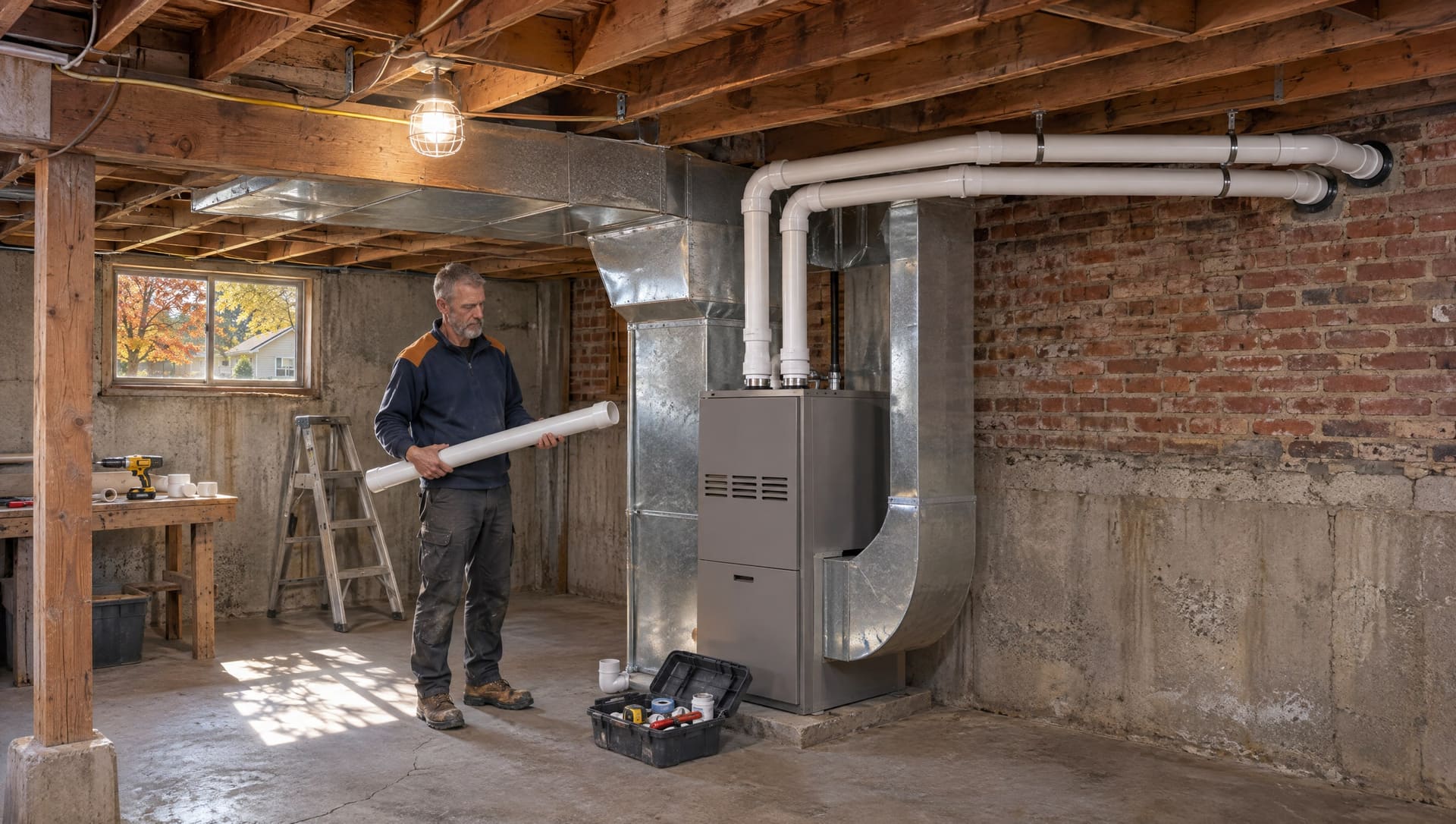
- Two plastic pipes running out through a side wall mean a high-efficiency condensing furnace. One pipe brings in combustion air and the other carries exhaust out. You'll also see a small plastic drain line, because these furnaces produce water as they run.
- A large, older cabinet in a house that once burned oil or coal may be a furnace that has been converted more than once. It may also be a newer gas furnace that inherited a duct system and chimney built for something else.
The rating plate inside the front panel lists the fuel, the input rating and the model. Take a photo of it before you call. It saves time.
Older houses in Angus, Thornton, Baxter, Ivy and Utopia
Essa Township was incorporated in 1850 and had 4,221 residents at the 1871 census, so there's a real stock of old houses here. Thornton's village core goes back to the 1820s and is among the oldest housing in the township. A house built before 1945 was heated with wood or coal, then usually converted to oil and later to gas.
That history usually leaves you with:
- Ductwork added after the fact, fitted into walls and floors that weren't designed for it, so the runs are long, the turns are tight and the returns are in odd places.
- Weak airflow to upper rooms. If the back bedroom upstairs never warms up in January, this is usually why. A bigger furnace doesn't fix it. Duct changes or a different approach for that part of the house might.
- An old masonry chimney. If the furnace still vents into it, the chimney may need a liner. If the furnace has moved to side-wall venting, a gas water heater left alone in that big chimney may not draft properly.
When one of these furnaces fails, the repair itself is often ordinary: an igniter, a flame sensor or a limit switch. The bigger questions come at replacement time, when the venting and ducts have to be looked at alongside the new unit. Our guide to what decides the cost of a furnace repair or a new furnace covers how those pieces change the price.
The Borden married quarters around Arras Road
The married-quarters housing at CFB Borden, around Arras Road, was built in the 1940s and 50s. These houses started with an oil or early gas forced-air furnace venting into a chimney, with small ducts and no plan for air conditioning.
A modern furnace pushed through those small ducts can run loud and overheat, and then shut itself off on the high-limit switch. That looks like the furnace failing, but the cause is airflow. Adding central air to the same ducts often gives weak cooling. Before replacing anything in one of these houses, it's worth having the ductwork and venting assessed, because they often have to be redone. Where the ducts can't carry air conditioning, ductless options or a heat pump may suit better.
Newer homes in Angus, Thornton and Baxter
Essa has grown quickly. The population went from 14,177 in 1991 to 22,970 in 2021, and most of the new houses went up in Angus, Thornton and Baxter. That includes the subdivisions on the edge of Thornton and the new builds in Baxter. Houses from the 1990s onward usually have a high-efficiency condensing furnace vented through the side wall, central air and often a ventilation unit.
Their usual faults are different from the older houses:
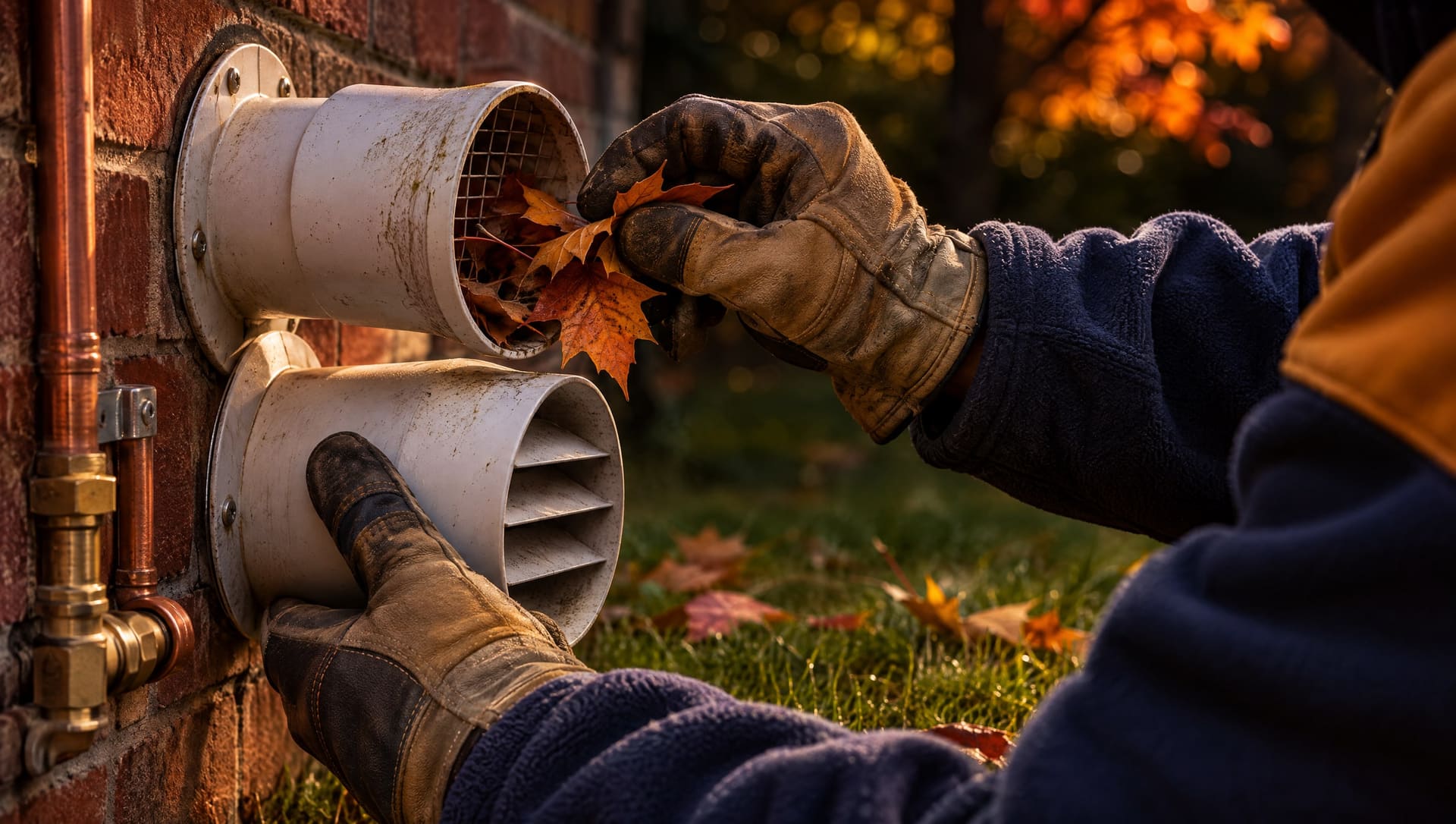
- Snow-blocked intake and exhaust pipes. The Egbert climate normals show about 174 cm of snow a year, falling on about 57 days. A drift over the side-wall pipes makes the furnace shut down for safety. Our guide to side-wall vents and snow explains what to check.
- Condensate drain problems. A clogged trap or a frozen drain line trips a pressure switch, and the furnace won't light or keeps restarting.
- Airflow that needs balancing, so rooms over the garage or at the far end of the house run cooler than the rest.
These furnaces work hard here. Egbert averages close to 4,279 heating degree days a year, and the record low is −35.5 °C, set on January 16, 1994. A furnace that's undersized, or short-cycling because of a drain or vent fault, has a long season in which to wear itself out.
What to know when any of them fails
A few points apply whatever is in your basement.
- Enbridge Gas, the gas utility, doesn't sell or repair furnaces and refers customers to an HVAC contractor.
- In Ontario, gas appliances are installed and serviced to the CSA B149.1 code, and the work is performed by TSSA-certified gas technicians.
- Check your carbon monoxide alarms. The Ontario Fire Code requires a working CO alarm next to each sleeping area in a home with a fuel-burning appliance, a fireplace or an attached garage. That covers any house with a gas furnace.
- Replacements may involve the township. The Township of Essa requires a building permit for renovations and alterations. Its application checklist asks for HVAC details, including heat loss and gain calculations and layout where applicable. That's also the right way to size a new furnace: from the house, not from the label on the old one.
- The County of Simcoe offers home repair funding for low- to moderate-income homeowners. It covers urgent repairs and takes applications year round, but funding is limited and there may be a waitlist, so apply early rather than in the middle of a cold snap.
When you call, say what the furnace is doing, what venting you saw and roughly when the house was built. That's usually enough to narrow down the likely cause before the technician arrives. You'll get a written price before any part is fitted.
If your furnace has stopped or is acting up, start with our furnace repair page.